
Planning Ahead for a Farmland Sale: Taxes, 1031 Exchanges, and Long-Term Wealth
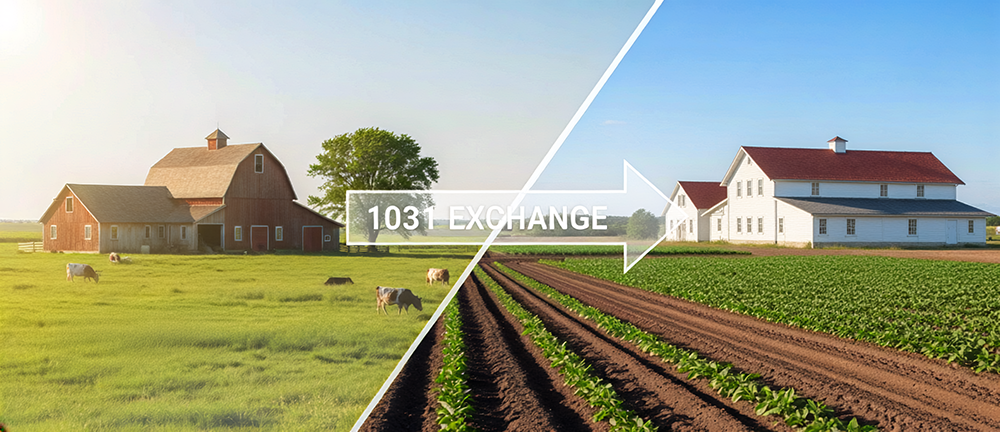
For many farm families, land represents decades of stewardship, appreciation, and hard work. When that land is sold, however, it can trigger a significant taxable event—often larger than expected. Planning before a purchase agreement is signed can materially affect how much wealth is preserved, how income is generated after the sale, and how proceeds are ultimately passed on to the next generation.
Early planning provides flexibility. Once a transaction is under contract, options narrow and decisions are often driven by deadlines rather than strategy.
Every 1031 exchange is unique. Ownership structure, financing, timing, and debt replacement all matter. These details are why early conversations—before the sale process begins—are critical.
Understanding the 1031 Exchange
A 1031 exchange—named after Section 1031 of the Internal Revenue Code—allows owners of investment or business real estate, including farmland, to defer capital gains and depreciation recapture taxes by reinvesting sale proceeds into other qualifying “like-kind” real estate.
Rather than paying taxes at the time of sale, the seller reinvests 100% of the pre-tax equity into replacement property. This often results in meaningfully higher income potential compared to reinvesting the after-tax proceeds.
To qualify, several rules must be followed:
- Sale proceeds must be held by a Qualified Intermediary, not received by the seller.
- Replacement properties must be identified within 45 days and acquired within 180 days of closing.
- The replacement property must be of equal or greater value and debt to avoid taxable “boot.”
Every 1031 exchange is unique. Ownership structure, financing, timing, and debt replacement all matter. These details are why early conversations—before the sale process begins—are critical.
Why Delaware Statutory Trusts (DSTs) Are Often Used
A Delaware Statutory Trust (DST) allows investors to acquire a fractional interest in institutional-quality real estate while still qualifying as replacement property in a 1031 exchange. DSTs are commonly used by farmland sellers who want to remain invested in real estate without taking on active management responsibilities.
Key benefits often include:
- Passive ownership with professional property management
- Monthly income from net operating cash flow
- Non-recourse financing provides personal liability protection
- Debt-replacement flexibility to match exchange requirements
- Diversification across properties, locations, or asset types
For sellers facing a sizable taxable gain, combining a 1031 exchange with DSTs can provide tax deferral, income continuity, and reduced management complexity.
When Capital Gains Are Minimal, Planning Still Matters
Not every farmland sale results in significant capital gains. Even so, selling land represents a major transition—from an illiquid asset to liquid capital—and creates an opportunity to reassess broader financial priorities.
Before closing, sellers should consider:
- Income planning, balancing near-term cash flow with long-term sustainability
- Investment diversification, including both traditional (stocks, bonds, etc.) and alternative strategies (real estate, private credit, etc.)
- Estate plan updates, reflecting new liquidity, evolving family goals, and legacy objectives
Having these conversations early allows for better decision making—without pressure from closing deadlines or market timing.
Final Thought
A farmland sale is more than a real estate transaction—it is a financial turning point. Whether or not a 1031 exchange is used, early coordination among real estate professionals, tax advisors, estate attorneys, and financial planners can help landowners preserve wealth, reduce uncertainty, and move confidently into the next chapter.
Securities offered through DAI Securities, LLC. Member FINRA/SIPC. Advisory Services offered through DAI Wealth, LLC., an SEC Registered Investment Advisory Firm. DAIS and DAIW are affiliated companies. Good Counsel Wealth Management, LLC is not affiliated with DAIS or DAIW.

Robert Tanhoff
President
Good Counsel Wealth Management
Rob has been an independent financial advisor since 2016.
His passion is providing value through comprehensive planning
to individuals and families as they navigate their financial lives.